Wednesday, March 16, 2011

Remembering Bill Koenig

David Broder, a Presidential and political scholar who wore a press ID in his hat, died this week. His departure extinguishes a generations-wide career in which he precisely informed those who wanted to know and kept a mirror up to reflect of those whose deeds needed monitoring. His back-of-the-section insights were always on the first page of my aggregator.

Bill KoenigHis passing reminds me of my friend, Bill Koenig, who's been gone 11 years now.

I first met Bill on my first day at Baseball Weekly. Over a beer, he told me was thrilled there were no assholes on the new staff. I told him he hadn't known me long enough and we became fast friends. I was his best man at his second wedding.

Bill casually observed nothing. He saw, anaolgized and started writing what seemed like volumes. He understood details and how you responded to his second question formed his third.

On the phone, Bill interviewed people on every minor league team every week. That volume doesn't leave time for more than five questions. Bill didn't need more than five questions; his work was often the best in the book each week.

I didn't see Bill in long form, when he was covering the Red Wings and the Olympics in Rochester, NY. They appreciated him in Rochester; he's in their Hall of Fame.

Fare thee well, David Broder, and I still miss Bill.

http://www.harborsights.com/bill/


Editor's note: Since I wrote this post, the NCAA men's basketball tournament has announced a first-round game between Penn State (my school) and Temple (Bill's) in Tucson. Bill always traveled to see the Owls in the tournmant, regardless of how far he had to fly from his spring training baseball assignment. Well, not even for you, Bill -- go Nittany Lions.

Tuesday, March 15, 2011

Attracting and engaging the elementary school user

Jamestown Elementary at The Smithsonian
This week, I was one of the chaperones for my daughter’s first-grade class on a field trip to the American Museum of American History. I have been waiting for this day since the kids were born.

Once inside the museum, I had my group of three girls and 90 minutes to explore the museum. The girls offered their attention only to the exhibits that offered one of four attractions:

  • Tactile multimedia. The Star Spangled Banner exhibit offered touch screen table tops. The kids could touch the screen and make the text and images slide. The kids were concerned more about the motion than the slide. With guidance, they were able to read and absorb the text.

  • Text which they could read in short amounts. The words were not as important as the sounds of the word.

  • Video. Any video had an opportunity for attention.

  • Audio. Everything that talked directly to the user. If an exhibit played period music, they walked right past. If the narrative had spoken words, they stopped. If the narrative had children speaking, they stopped and listened.

Our group’s favorite exhibits were Dorothy’s ruby slippers from The Wizard of Oz, the elevator and water fountains.

Walking through the exhibits, kids have an attention span of about 20-30 seconds. The adults walking behind them are no different.

Jamestown Elementary at The SmithsonianIn a Civil War exhibit, the kids pointed and shouted, “TV, TV.” It was a multimedia presentation a screen, audio and five buttons, which started five different narratives. Each narrative had a 5- to 8-second intro, with an opening text slide and period music. The kids’ attention span was … 5-8 seconds. Each of the kids wants to push a button to make something happen.

Once the kids watched an entire narrative (about 60 seconds), they were engaged. The stories were well told. But the narrative designer didn’t take into account the audience. The opening doesn’t require 5-8 seconds. In an room with 50 competing artifacts and distractions, the narrative start doesn’t need more than 2 seconds. Museum exhibits need to adapt to Internet audiences, whether they’re 8 years old or 50.

Jamestown Elementary at The SmithsonianTactile takeaways: The Smithsonian information desk offers bookmarks with URLs () and iTunes to search the museum online. The kids liked the bookmarks. Each held their hands out to get a bookmark, then handed them to for me to hold. Along with their coats.

Sunday, March 13, 2011

Getting it right is everything

Reading The Ombundsman column today in The Washington Post reminded me of why I canceled my 7-day subscription to the paper last year, and also why I renewed it last month.


This ombundsman (Patrick B. Pexton) is new to the job and was recounting his first week, filled with complaints from online and print readers. Some believe The Post is subjective instead of objective, or subjective from an opposing viewpoint.

Other print readers complained ”mistakes lead to a steady drip-by-drip erosion of their confidence in The Post.” I was one of those readers and I stepped off the print subscription bus last year. I was too tired of errors and lazy writing in the paper to have the confidence I once had in The Post. Writers were no longer trying to engage me before the jump and too often the graphics were obvious. The sports section gave little to mid-season baseball during the week, figuring readers would follow the season online. But online doesn’t get me through a morning Metro ride when I’m trying to read the box scores.

I wrestled with having the paper only on Sundays, then still railing at thin sections. But other small publications can still inform me and engage me. The Post seems to be saving it for the big stories on their own time. When The Post can roll out a Walter Reed medical story when it’s ready, it’s terrific. When The Post needs to run engaging features and explanatory packages on the Nationals and Orioles on a regular basis, I get writing at a 5th-grade level.

The Post has fallen most dramatically in the Style section, which I always thought was the differentiator from The LA Times. When I lived on the West Coast in the early 1990s, the LAT was tremendous: covering California and the Pacific Rim as if they were a suburban beat, sharply focusing on pro sports and major college events. They lacked a fun or critical Style section, mostly because LA is an industry town; if the paper crushed a new movie, they could lose studio advertising.

But in DC, the Style section was always sharp, biting and nearly always a must-read. Now it’s simply tired, with look-at-me-writing and Charlie Sheen focus.

I no longer felt luck to be in the subscription area for one of the great newspapers in the world. The Post had become a local paper, in which readership believes about 70% of what it reads, then cross-references it online against the New York Times.

What brought me back were my elementary-school kids. Where are the comics? Where’s the paper, we need it for a school project? I learned how to read from the NY Daily News, and I killed time in study hall in middle school with the Mr. Cohen’s New York Times, reading the Supreme Court docket for the coming week.

Was I denying my own kids the same opportunity? So when a Post telemarketer called and said I could get the rest of the week for 31 cents, I came back.

I still see the errors. While I understand why, they’re still unforgivable. In the ombundsman report, Pexton focused on one concrete issue: A print graphic that listed pension liabilities in millions of dollars instead of billions. According to Pexton, the online graphic was correct.

I can see how the error could have been made; I’ve been on both sides. Pexton credits the writer with having the figures right, but he probably never met with the artist who created the graphic. The information was most likely passed in an editor’s meeting, then through a graphics editor to an artist, who very well may have thought the millions figure was correct. The error could’ve been made by a content editor, graphics assignment editor, research or the artist.

Mistakes are made by the dozens daily at a newspaper. What keeps the information flowing – and correct – are the multiple readers by copy editors. In the old days, like 10 years ago, stories (and graphics) would’ve been read and cross-referenced by five different people, whose job it was to get it right and keep it right. Most stories are now getting two reads by people whose focus is split on multiple monitor screens.

I hope The Post gets it right and gets it right soon. This kind of close-enough communication leaves the online door open for the pros at Huffington Post, Slate and AOL, who simply aren’t good enough or too obviously biased. Digg amateur linkers give your money’s worth with their free service.

And good luck to us readers. We can only vote with our dollar, which equals about three weeks of weekday newspaper subscriptions these days.

Monday, June 1, 2009

Secret. Agent Man.

Potomac Secret Agent, man"With every move he makes
Another chance he takes
Odds are he won't live to see tomorrow."


We live in a world of great opportunity, which is another way of saying layoffs, foreclosures and corporate financial ruins afford us a new opportunity to find new ways to keep on keeping on.

Gerry Dunn is an example of a social media entrepreneur who defines his era by re-defining himself.

Dunn was a long-time Maryland realtor and real estate investor who morphed into a Virginia mortgage broker. To connect with his customers and peers, and to differentiate himself from his competitors, he sent out a Friday e-mail. In half the message he'd recount the week's mortgage rates and news. In the other half, describe a bottle of wine. Among Dunn's passions is wine, and once he created a blog with his backlog of wine reviews, winegent.com become a niche favorite.

The mortgage business soured last year and Dunn was looking for a new career. He decided to sell residential homes in Potomac, MD. But real estate is a closed market for a new broker, even one with decades of experience. So Dunn invented a new persona: Potomac Secret Agent.

On his blog, potomacsecretagent.com, Dunn has posted nearly 100 reviews of open houses in the area. With a single cellphone photo from the street, Dunn describes the attributes of each home, but rates the value of the asking price — and for what price it should sell.

Four years ago in the Washington, DC, residential market, everything with a doorbell and a toilet sold at 30% over value. In 2009, homes are aging on the market longer and longer and Dunn is telling owners why.

Following another of Dunn's passions, the Potomac Secret Agent urged Montgomery County drivers to "drive gently," by placing bright red signs under the speed cameras on Memorial Day weekend.

Local television pounced on the story. Dunn became the face of a cause against speed camera tickets, sort of a bureacracy hiding behind a lens — a different kind of secret agent.

What other ways do you think the Potomac Secret Agent can spread his message through social media?

Wednesday, May 27, 2009

if you were organized, how little could you work?

The four hour work week, by timothy ferriss
Timothy Ferriss should fire his marketing staff. He has an interesting concept, but his marketers are delivering the wrong message.

I first heard Ferriss on NPR, talking about his book, The 4-Hour Workweek. I was drawn to the message for the wrong reasons. His concept is spot on, though his packaging is flawed.

If you judge this book by its cover, you might think Ferris is a snotty slacker (from Princeton, don’t you know), trying to avoid work while raking in millions. The author isn’t sidestepping work, but embraces enormous “outside” tasks and interests.
Ferriss lumps adults into two categories, then challenges the reader to accept their role:
New Rich: Those with options and personal goals as first priority.

Deferrers: Those work and save for long-term reward.

Ferriss challenges the status quo and demands readers address and organize their lives: Manage that which you can manage.
Emphasize your strengths, he preaches, and avoid your weaknesses.

Less is not laziness. Focus on being productive instead of busy.

Are you being productive, or just active?

Are you inventing tasks to avoid important tasks?

Ferriss urges readers to read e-mail twice a day: at noon and 4 p.m. It is the reader’s job to train those around him to be effective and efficient.

Twas this point that made me read the book after hearing the NPR interview. I’m a slave to my Outlook and Gmail inbox, and have forever believed my multi-tasking efforts were the definition of productive. Ferriss helped me understand the difference between busy and active, between busy and cluttered.

Is Ferriss a slacker? No. An ultravagabond addicted to travel? Yes.

He must be bright; he talks about making $40,000 a month on a business that runs itself. He works hard, but doesn’t want to be accountable to conventional standards and workflows. Could he make more if he stayed in one place? Sure, but then, he wouldn’t be traveling the globe several times a year.

Ferriss’ marketers present him as a vagabond, lazing in a beach hammock. I see him as incredibly organized, pursuing his life work: seeing and enjoying the world now while maintaining a comfortable income stream.

How about you: With which lifestyles and cultures do you best align?

Monday, May 25, 2009

drop the "social," and Twitter works for corporate

@NoVaDaddy on TwitterOdds are, I guess I should've skipped Twitter by now. Or at least a 60% chance.

I joined Twitter about a month ago, and according to popular Internet stats, that's about the time 60% of new users leave. The novelty's gone, the intrigue has faded and those Tweeters they'd been following just weren't that interesting anymore.

Who blames them?

Twitter allows you to follow people globally. Hear from Australians going to bed in the middle of your day and New Yorkers waking up late in your morning. And, for the most part, they're spewing a lot of crap.
  • "I'm over my blue funk."
  • "Morning cappuccinos are the best."
  • "LMAO"
Wall Street Journal graphic on Twitter.com increase in users
It's not 140 characters that are limiting these lame posters; it's their lame attitude.

Corporate tweeters have a unique opportunity in this forum. Like much of social media, Twitter is a one-trick poiny, but it's a different trick for different ponies. Most users focus on the individual > individual(s) broadcast method. I encourage corporate clients to focus on corporation message > sea of individuals.

I'm most interested in two corporate Twitter users: @homedepot and @matrix group. They speak intelligently and respectfully to their followers, always informing, always stimulating and never selling.

My favorite individual tweeter is Jeff Veen (@veen). He's started (another) new business: Small Batch. Just before he opened the business, he only occasionally tweeted. Regular readers knew he was up to something. Following the release, he used Twitter to inform customers and guide friends and visitors.

So I give the following Twitter advice to my clients:
  • Say more by saying less
  • Be honest
  • Be transparent
  • Be smart
  • Be right
  • Be brief and be gone

Friday, May 22, 2009

it takes a village. but what if they're all village idiots?

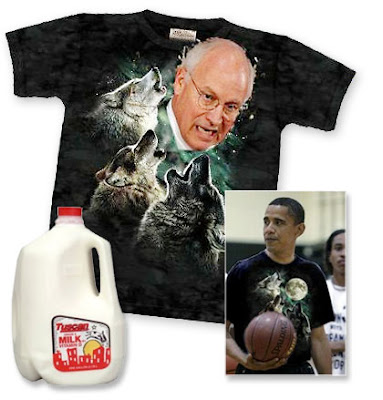
how about those wolves? gotta get me some wolvesThe wisdom of crowds? mmmaybe not.

James Surowiecki’s book, The Wisdom of Crowds, explores the concept of how large groups of people can be smarter than an elite few: Better at solving problems, fostering innovation and coming to wise decisions.

Mr. Surowiecki might have been startled by a story in The Washington Post about how an unremarkable T-shirt soared to the very top of Amazon’s best-selling clothing list. The very, very top.

The black T-shirt pictures three wolves howling at the moon; you’ve seen it — basically — in every T-shirt shop on every boardwalk. According to The Post, the shirt got a push from collegehumor.com. And then, people were able to post images of themselves wearing the shirt. And other people wearing the shirt. This week, hundreds of reviewers gave their heartfelt recommendations of the shirt on Amazon’s comments area. Wisdom of crowds? Really?

  • I walked from my trailer to Wal-mart with the shirt on and was immediately approached by women

  • I have worn the T-shirt many times and have yet to exhibit any skill at bounding through the woods or sniffing. My growling abilities still suck too.
    The Three Wolf Moon T-Shirt gave me a +10 resistance to energy attacks, +8 Strength, and added 30 feet to my normal leap.

  • Since owning the Three Wolf Moon T-Shirt, I have successfully solved 7 crimes in my city, including 4 cold case murders.

  • Most shirts like this only contain one wolf. This shirt has three wolves, plus a moon. You are basically getting three wolves and a moon for the price on one wolf. You won't find that deal anywhere else.
So it’s just a lot of people getting silly over a shirt, right? Except I saw Jared Spool speaking at a recent Usability Experience conference. He talked about another item on Amazon that had attracted an enormous crowd: Tuscan Whole Milk, 1 Gallon, 128 fl oz. More than 1,000 reviewers offered their opinions. Among them:
  • Once upon a mid-day sunny, while I savored Nuts 'N Honey,
    With my Tuscan Whole Milk, 1 gal, 128 fl. oz., I swore
    As I went on with my lapping, suddenly there came a tapping,
    As of some one gently rapping, rapping at the icebox door.
    'Bad condensor, that,' I muttered, 'vibrating the icebox door -
    Only this, and nothing more.'

  • Has anyone else tried pouring this stuff over dry cereal? A-W-E-S-O-M-E!

  • Horrible service, I bought my milk and went with the 7-9 day super saver shipping method and it arrived warm and curdled. What the hell?
So maybe it’s not wisdom the crowds are displaying here, but they are showing incredibly, collaborative creativity. Maybe you’ll look at milk differently, or notice someone – in a crowd – wearing a wolves T-shirt. These crowds have built a scaffolding environment upon which others can add.

How will you contribute?